
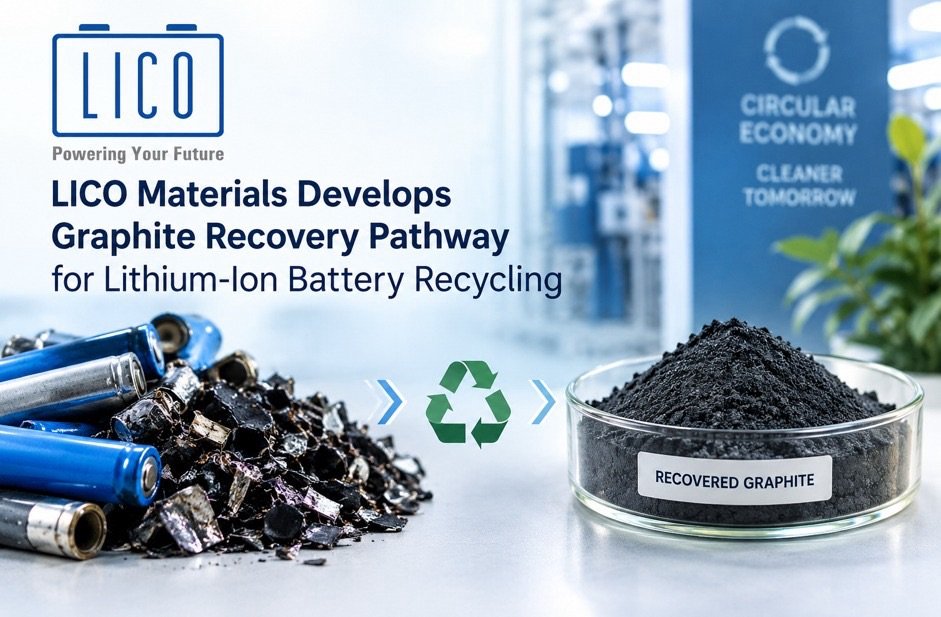
LICO Materials has developed a new pathway to recover graphite from end-of-life lithium-ion batteries and battery manufacturing scrap, with the recovered material set to be supplied to Epsilon Advanced Materials (EAM) for use as a secondary feedstock in graphite anode production.
The initiative connects LICO Materials’ battery recycling and critical mineral recovery capabilities with EAM’s expertise in advanced battery materials, creating a circular pathway that can return recovered graphite from used batteries into the production of new battery materials.
Graphite is a key material used in lithium-ion battery anodes and accounts for around 20–30% of a battery’s weight. With the global graphite supply chain highly concentrated, recovering graphite from spent batteries and manufacturing scrap could provide an additional domestic source of this critical material and help reduce dependence on virgin and imported resources.
For India, the development comes as domestic battery manufacturing expands. According to the Ministry of Heavy Industries, meeting India’s projected lithium-ion battery demand of 210 GWh by 2030 could require around 200,000–230,000 tonnes of graphite anode material annually.
Under the initiative, LICO Materials will recover graphite through its proprietary critical mineral recovery processes and supply the material to EAM. The recovered graphite will then undergo further processing and qualification for potential use within EAM’s graphite anode materials platform. Samples are expected to be available for customer validation by the end of 2026.
EAM produces synthetic, natural and blended graphite anode materials for applications including electric vehicles and battery energy storage systems. The integration of recovered graphite could provide an additional feedstock stream while supporting resource efficiency and greater circularity across the battery materials value chain.
The collaboration marks a step towards closing the graphite loop in India’s battery ecosystem, linking battery recycling with the production of new anode materials and strengthening the country’s efforts to build a more resilient and circular battery supply chain.