
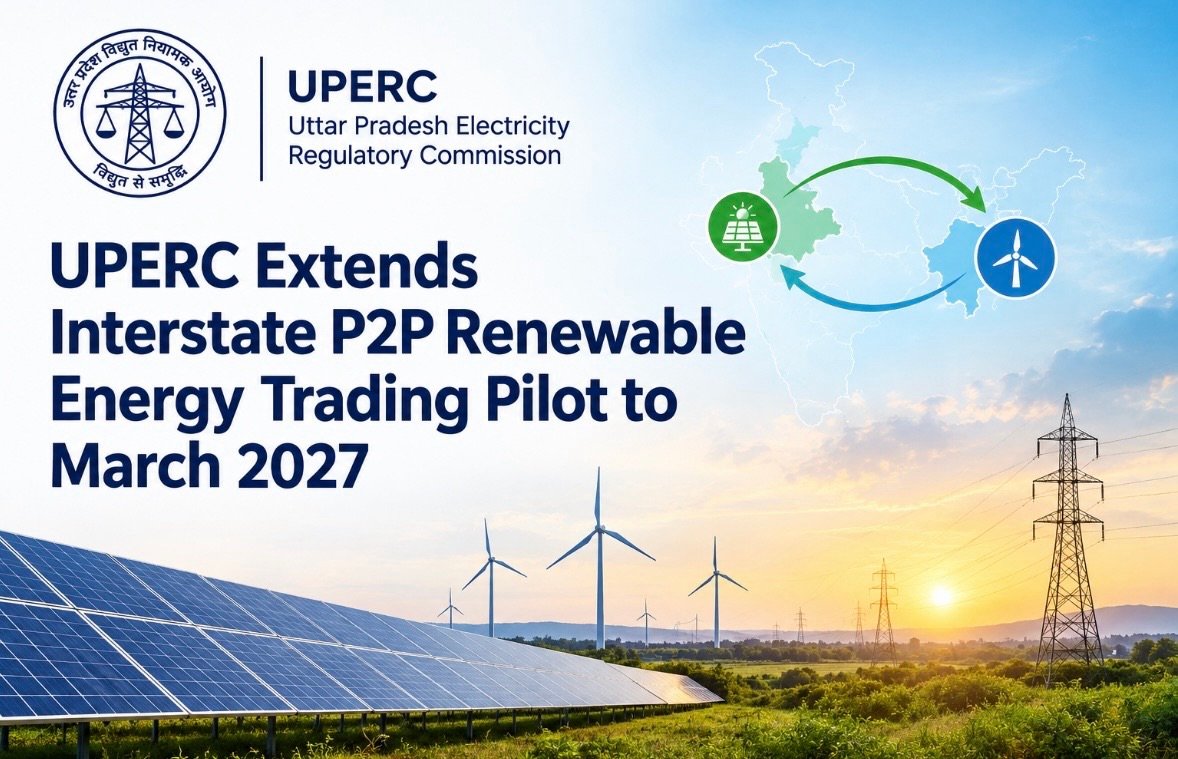
The Uttar Pradesh Electricity Regulatory Commission (UPERC) has extended regulatory approval for an interstate Peer-to-Peer (P2P) renewable energy trading pilot until March 31, 2027. The extension, granted with retrospective effect from August 16, 2026, is aimed at providing additional time to evaluate the performance and scalability of decentralized renewable energy trading in India.
The decision follows a petition filed by Pashchimanchal Vidyut Vitran Nigam Limited (PVVNL), which was selected by the Ministry of Power and REC to represent Uttar Pradesh in the nationwide P2P renewable energy trading initiative.
Operating under the India Energy Stack (IES) framework, the pilot enables rooftop solar prosumers to sell surplus electricity directly to consumers through a digital trading platform. Phase I includes participants connected to PVVNL in Uttar Pradesh, Tata Power Delhi Distribution Limited (TPDDL), and BSES Rajdhani Power Limited (BRPL).
Regular trading under the pilot commenced in March 2026. Between February and July 2026, the initiative recorded 1,164 executed and settled trades, indicating growing participation in distributed renewable energy transactions.
The energy units traded through the platform were verified using the respective distribution companies’ Meter Data Management systems and adjusted directly in consumer electricity bills. According to PVVNL, the pilot functions as a regulatory sandbox using existing distribution infrastructure without requiring parallel networks or compromising grid safety and utility revenues.
The extension until March 2027 will allow regulators and participating utilities to further assess billing mechanisms, interoperability between DISCOMs, consumer participation, and operational challenges. The findings are expected to contribute to the development of a broader regulatory framework for P2P renewable energy trading across India.
With rooftop solar adoption continuing to expand, the pilot represents an important step toward enabling consumers to become active participants in the country’s evolving distributed energy ecosystem.