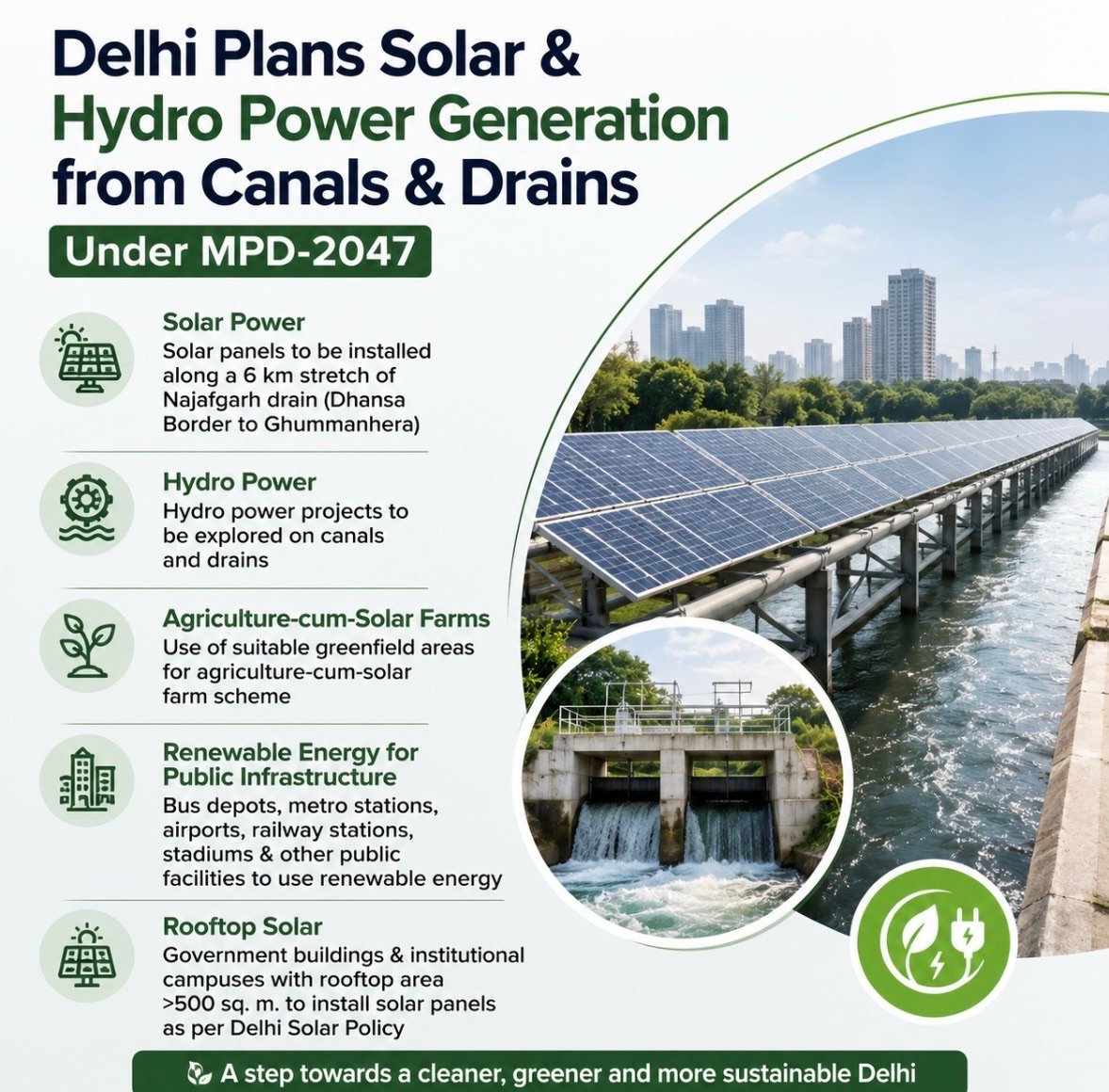
Delhi is planning to tap its existing canals and drains for solar and hydro power generation under the proposed Master Plan of Delhi 2047 (MPD-2047). The initiative is part of a broader strategy to expand renewable energy generation within the national capital and make greater use of existing infrastructure.
The draft MPD-2047, approved by the Delhi Development Authority (DDA) and subsequently moved forward for central approval, calls on the agencies responsible for canals and drains to assess their renewable energy potential and develop projects wherever technically feasible.
One key opportunity under consideration is the installation of solar panels along a six-kilometre stretch of the Najafgarh drain, extending from Dhansa Border to Ghummanhera. The proposal would use existing urban infrastructure to create additional renewable power generation capacity without requiring conventional large land parcels.
The master plan also proposes expanding the use of suitable greenfield areas under an agriculture-cum-solar farm scheme. This approach aims to combine agricultural activities with solar power generation and create additional avenues for renewable energy deployment.
Renewable Energy for Public Infrastructure
MPD-2047 further recommends increasing renewable energy use across public infrastructure. Bus depots, metro stations, airports, railway stations, stadiums and other public facilities could progressively meet their electricity requirements through solar and other renewable sources, subject to feasibility.
The plan also proposes that government buildings and institutional campuses with rooftop areas exceeding 500 square metres install solar panels in accordance with the Delhi Solar Policy.
The proposed measures position renewable energy as an important component of Delhi’s long-term urban development strategy, with the city looking to utilise rooftops, public infrastructure, canals, drains and suitable land resources to accelerate its clean-energy transition.